‘The barriers to breakthrough in performance are often embedded in the environment where we need to perform the most’
Kimber. C 2005 MSc. Research.
What happens when you work with Cliff?
The work begins with the person, the situation and what is at stake.
Cliff works with senior leaders when the decisions in front of them matter, the circumstances are complex, and the usual answers are no longer sufficient.
The work is not about supplying answers.
It is about creating the conditions in which a leader can think more clearly, see more of what is happening, recognise what matters, and make better decisions.
Sometimes that means stepping back from the immediate problem. Sometimes it means challenging an assumption, testing a way of thinking, or looking at the situation from another perspective. Sometimes it means staying with something difficult until what matters becomes clearer.
The objective is not insight for its own sake.
It is what happens when insight changes what someone sees, how they think, and ultimately what they do.
The conversation
The work is a conversation. At its best, it becomes a dialogue.
Cliff listens carefully to what is being said, and to what may sit behind it. He questions, challenges and tests. Where useful, he brings a framework, model, exercise or different perspective into the work.
There is no prescribed path. The aim is to help the client examine the situation for themselves, recognise what may have been overlooked, and arrive at conclusions they can own. This can be direct. It can sometimes be uncomfortable. It can also be surprisingly simple.
A recurring theme in the work is getting back to fundamentals: what is actually happening, what matters, what is getting in the way, and what needs to happen next.
When the work matters
Clients come to Cliff at different points in their professional lives.
They may be taking on greater responsibility, moving into partnership or executive leadership, navigating strategic or organisational change, facing a difficult decision, or trying to regain clarity and direction in circumstances that have become complicated.
The work may be focused on a particular situation or develop over a much longer period.
It may be one-to-one, or involve a leadership team or a tailored intervention.
What remains consistent is the need for a space in which important things can be thought about properly.
A practice built over time
Cliff has coached senior leaders for more than twenty-five years.
His clients have included more than 250 equity partners, 14 vice-chairs within leading professional services firms, CEOs and executive leadership teams, entrepreneurs, elite athletes and private clients.
His work has included Deloitte, IBM, Lloyds Banking Group, Macquarie, Nomura, McKinsey & Company, Korn Ferry, Lazard, Hitachi and England Rugby, among others.
He has worked across industries and jurisdictions, and with people operating in circumstances where judgement, performance and the consequences of decisions matter.
The practice has been built through that work rather than around a particular coaching formula.
What clients notice
The language clients use about the work is remarkably consistent.
They talk about being challenged. About seeing things differently. About finding clarity. About practical tools and frameworks. About being listened to properly.
And, importantly, about reaching their own conclusions.
One client described how Cliff was able to lead him to a point where he made his own conclusions from facts and experiences that were already there but had not previously been obvious to him. He was clear that Cliff did not dictate or instruct what he should do.
Another described the work as focusing on fundamental skills and scenario-based planning rather than prescribed paths.
Others describe the experience more simply: being challenged to think differently, having assumptions tested, finding a way through a difficult transition, or having someone act as a perceptive sounding board when the stakes are high.
The value of the work is ultimately determined outside the conversation.
In the decisions made, the behaviour that changes, the performance that follows, and the capacity to deal with what comes next.
The work continues
Cliff's work and thinking about performance have developed alongside his coaching practice for more than twenty-five years.
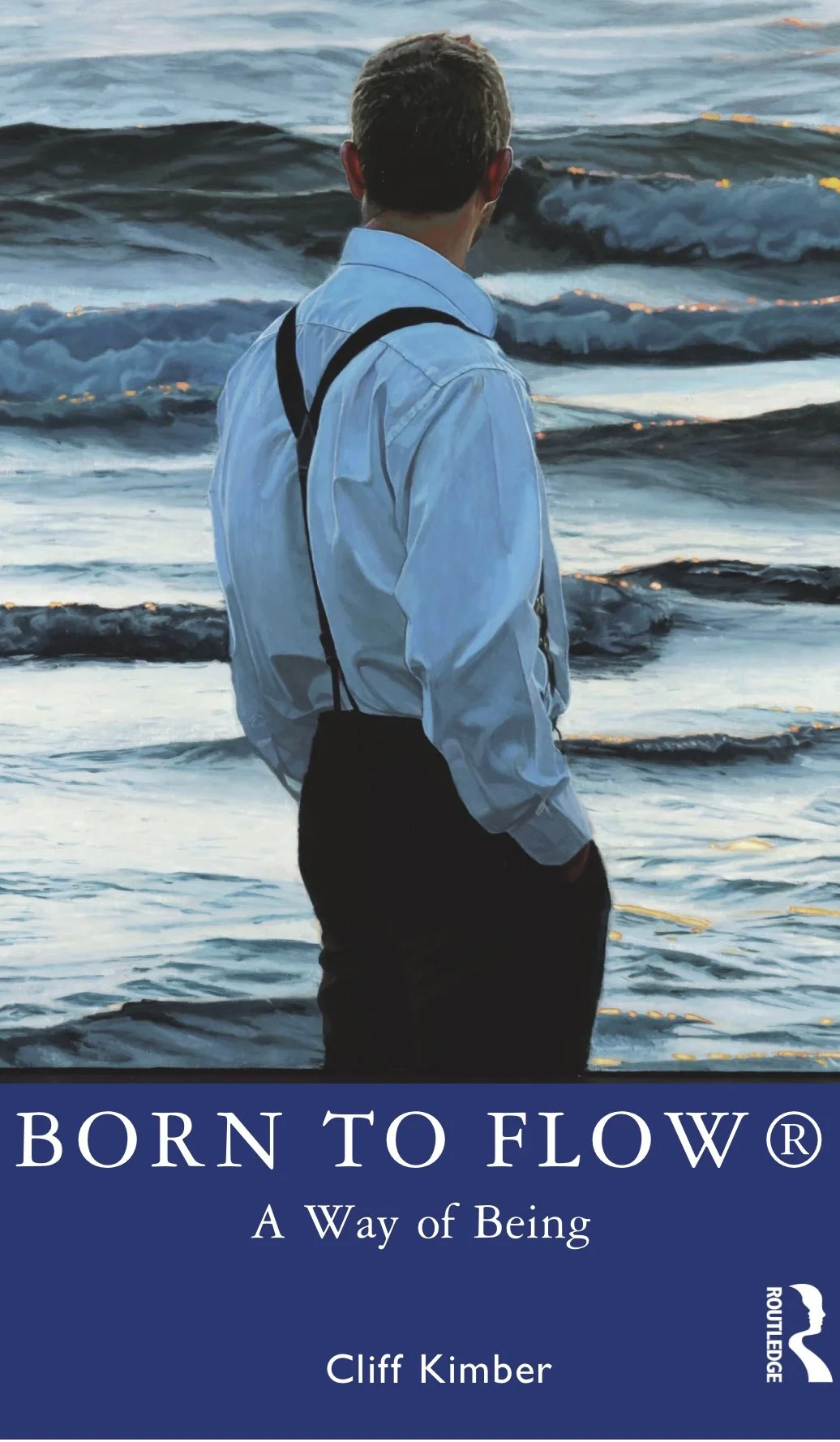
Flow is central to that thinking.
He defines flow as a complex, dynamic, psychological process: something we curate, experience, participate in and continually adapt to.
This informs the work, but it does not replace it.
The starting point remains the person in front of him, the circumstances they are in, and what they are trying to do.
A private conversation
If you would like to explore working together, please get in touch.